
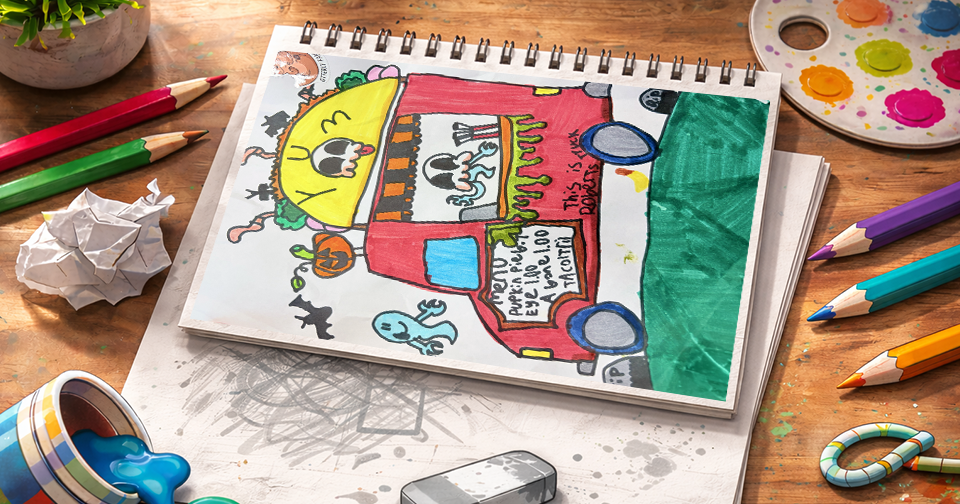
A sketch that feels off, a color that doesn’t work, or a drawing that looks awkward is not a failure—it is information. Those moments show an artist what to adjust next.
One of the most helpful habits students can develop is learning to pause and study a mistake instead of immediately erasing it. For example, when drawing a face, many students notice something feels strange but cannot identify why. Instead of starting over, they can compare their drawing to a reference image. Are the eyes too high on the head? Is the nose too small? Is the head shape too narrow? These small observations help the next drawing improve dramatically.
Artists also grow by drawing the same subject multiple times. A student learning to draw hands might draw one hand that looks stiff or awkward. Instead of giving up, they can try again using simple shapes. Start with a square or rectangle for the palm, then cylinders for the fingers. After two or three attempts, the hand usually becomes more natural because the artist begins to understand the structure.
Color mistakes can also be powerful learning moments. Imagine a student painting a sunset that looks dull instead of glowing. Rather than throwing the painting away, they can experiment on a scrap paper first. Try adding warmer colors like orange, pink, or yellow. Try placing a darker blue next to the orange to create contrast. Suddenly the sunset begins to feel more vibrant. The first “mistake” helped reveal what the artwork actually needed.
Another useful strategy is something many professional artists do: create quick practice sketches before the final drawing. These small drawings are often called thumbnails. Instead of making one large drawing immediately, students can sketch three or four small versions of the idea. They might test different compositions, different object placements, or different lighting. These small studies allow artists to make mistakes early, when it is easy to adjust.
Students can also turn mistakes into creative opportunities. If a line goes in the wrong direction, sometimes it can become part of a shadow or texture. If paint drips unexpectedly, it might add energy to the piece. Some artists intentionally use loose or messy marks because those unexpected moments give the artwork personality.
One helpful mindset is to think of each drawing as practice, not performance. Just like athletes improve through repetition, artists improve by making many attempts. A sketchbook should be a place where students feel comfortable experimenting. Some pages will look great, and others will feel messy—but every page builds skill.
A simple classroom habit that helps students grow is to ask three reflection questions after finishing a piece:
What part of the artwork worked well?
What part was challenging?
What would you try differently next time?
These questions turn mistakes into learning tools.
In the end, mistakes are not something artists need to fear. They are signs that the artist is trying something new. Every imperfect line, awkward proportion, or strange color choice is simply part of the process of learning to see and create more clearly. Over time, those small lessons add up, and students begin to notice something surprising—the mistakes that once felt frustrating were actually helping them become stronger artists.